I watched this morning a Ted Talk by Joe Ehrmann, entitled, “How to be a man.” The message was simple. It was about rewiring the meaning of the phrase, “Be a Man.” Joe preaches that masculinity should be defined in terms of relationships and commitment to a cause.
I have read Mr. Ehrmann’s book, InSide Out Coaching, and it helped me to formulate and refine my own coaching philosophy and approaches to coaching. I have counted Joe Ehrmann amongst the coaches that I have learned a great deal from over the years. I have been most impressed with Mike Krzyzewski, John Wooden, and Joe Ehrmann. They have gotten to the essence of coaching and leading. And they demonstrate the importance of qualities like trust, communication, collective responsibility, loyalty, caring, industriousness, and enthusiasm. They talk about leading with the heart and exercising judgment rather than setting and following rules. I admire most about Joe Ehrmann and his book is that he provides a skeleton of a blueprint for being a coach, which is to say that he tells the audience to reflect on their past experiences in order to develop a coaching philosophy of their own.
It is the self-reflection and character-building traits that draw me to these three men. It is especially the character-building and the lessons that we can impart to our players and our children. There are several causes to be committed to in life. For me, I have felt compelled to coaching over the last few years. And the burning reason for this calling is the ability to impart wisdom, to build character, to help others develop self-esteem and self-confidence, and to be a positive role model. In short, I am called to make a difference, to make my mark. And I believe the best way for me to do so is through teaching.

Grandpop and Aunt Mary
I look up to my father, and I look up to my grandfather. I think they both are profound examples in my life. I often reflect on my grandfather. He was, of course, a man. And I am certain that he had faults. I don’t want to idolize him. But I have certainly put him on a pedestal. I do believe he was great. When Joe Ehrmann spoke of deathbeds in his Ted Talk, I thought about my grandfather, and his funeral. I thought about the hundreds of cars in the procession, and of the many people that introduced themselves to me and talked about the profound impact my grandfather had on their lives. He was a man for others. I find him to be the model of a man, and I am grateful to have known someone who I can always compare myself to, and strive towards. And I am happy to hear Joe Ehrmann’s talk about being a man, and that it is consistent with the way in which I believe my grandfather lived and the lessons he imparted to his children, and to so many children that were educated by him at Loyola Blakefield.
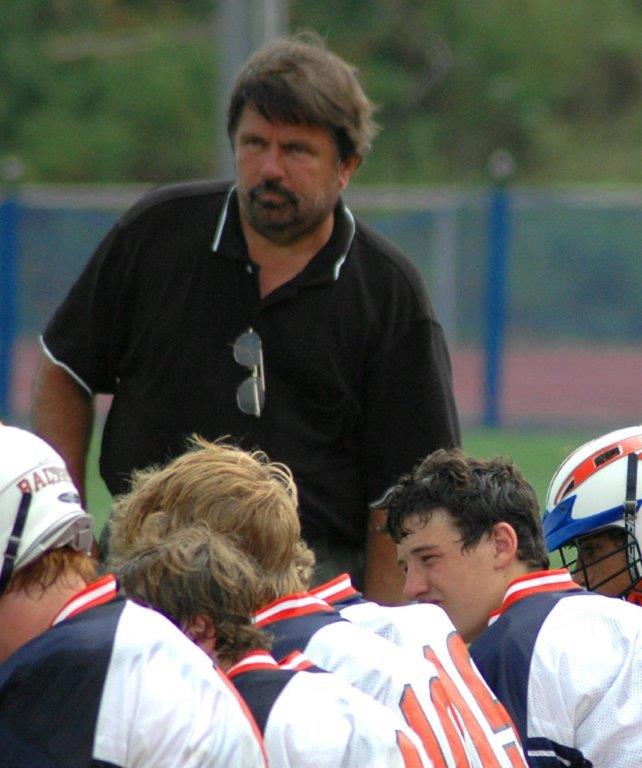
My father, 2005 at the Gait Cup
I know that my father strives to be like his father as well. And he has helped so many people in his lifetime. He has done so to a fault to himself and to my mom. He has worked tirelessly over the years helping kids, helping the community, providing people hope; I don’t want to recount all of his efforts, but they are many – varied and vast. And I know about a lot of them, and what motivates my father. He is another model of a man. He has chosen a different path than his father, but not so different. He is a coach, which is very much akin to a teacher.
I have 3 sons. 3 sons that I want to remain sensitive. I want them to have empathy and express their feelings. I want them to think about how their actions affect others. I want them to understand love. And I want them to treat others with the respect that they want for themselves. And so I want the message that Joe Ehrmann preaches to be heard loud and clear. And I hope he is a catalyst for change. At the very least, he is a catalyst for change in me, and he provides me with another blueprint that I can use to structure my lessons with my children: masculinity is about relationships and commitment to a cause.
Thank you, Mr. Ehrmann, for the wonderful talk. I thoroughly enjoyed it.
 Six With Sticks